

Clear Aligners vs. Braces for Adults: What Lynchburg Patients Need to Know
If you’ve been considering straightening your smile as an adult, you are far from alone. According to the American Association of Orthodontists, roughly one in four orthodontic patients today is an adult, and that number keeps climbing. The big question almost every adult patient asks when they sit down for a consultation is the same one: clear aligners vs braces, adults especially want to know which option is actually better? The honest answer is that both work, but they work differently, and the right choice depends on your bite, your lifestyle, your budget, and your goals.
At O’Donnell Dentistry in Lynchburg, VA, we help patients weigh these options every week. This guide breaks down the real differences between clear aligners and traditional braces, the science behind each, and the practical factors Lynchburg adults should think about before making a decision.
How Each Treatment Actually Works
Before comparing outcomes, it helps to understand what each option is doing in your mouth.
Traditional Braces
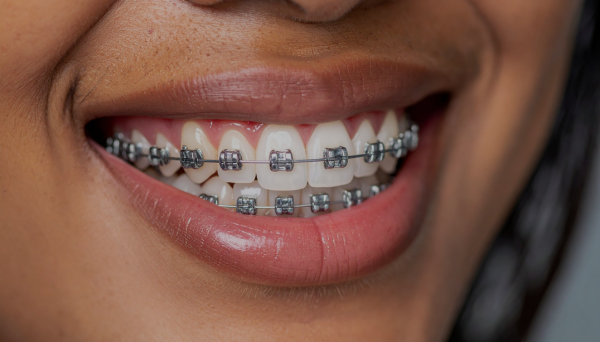
Braces use metal or ceramic brackets bonded to each tooth, connected by a thin archwire. Your dentist or orthodontist tightens and adjusts that wire over time, applying continuous, highly controlled pressure that moves teeth into their target positions. Because braces are fixed to the teeth 24/7, they work without any effort on your part, which is a major reason they remain the gold standard for complex cases.
Clear Aligners
Clear aligners are a series of custom-fit, virtually invisible plastic trays. Each tray nudges your teeth a small amount, and you switch to a new tray roughly every one to two weeks. Treatment is guided by 3D digital planning, so you can often preview your final smile before you ever begin. Aligners are removable, which is both their biggest advantage and their biggest responsibility. You can explore what this process looks like at our practice on our clear aligners service page.
Clear Aligners vs Braces for Adults: Effectiveness
This is the question most patients really care about. A randomized study published through the National Institutes of Health compared 100 adult patients treated with either clear aligners or conventional metal braces over 12 months. Both groups saw substantial improvement, with only a small difference in alignment scores, suggesting that for most mild to moderate cases the two options are comparable.
That said, braces still tend to have the edge for certain complex situations:
- Severe crowding or significant rotations of individual teeth
- Major bite corrections, including deep overbites, underbites, or crossbites
- Vertical tooth movements, which require continuous mechanical force
Clear aligners, on the other hand, tend to excel at:
- Mild to moderate crowding or spacing
- Relapse cases (teeth that shifted after previous orthodontic work)
- Minor bite refinements and cosmetic alignment
For a Lynchburg adult with a fairly straightforward case, both paths are likely to produce excellent results. For more involved bite correction, your dentist may recommend braces or a hybrid approach.
Comfort, Appearance, and Lifestyle
Effectiveness is only part of the picture. A patient satisfaction study published in the Journal of Pharmacy and Bioallied Sciences found that while both treatments achieved similar clinical outcomes, aligner patients consistently reported much higher satisfaction scores for aesthetics, comfort, and reduced speech interference. For working professionals, presenters, and anyone conscious of how treatment will affect daily life, those differences matter.
Appearance
Clear aligners are nearly invisible. Most colleagues, clients, and friends will never notice you’re wearing them. Traditional braces are far more visible, although modern ceramic brackets are less conspicuous than the metal versions many adults remember from their teenage years.
Comfort
Both treatments cause some soreness when teeth shift, especially during the first few days of a new aligner or after a wire adjustment. Aligners have no brackets or wires to irritate cheeks and lips, which many patients find noticeably more comfortable day to day.
Eating and Oral Hygiene
Aligners come out for meals, brushing, and flossing, so you can keep eating the foods you love and maintain your normal oral hygiene routine. Braces require avoiding sticky, hard, and chewy foods, and brushing and flossing around brackets and wires takes extra time and care.
Responsibility Factor
Here’s the tradeoff. Aligners only work when you wear them, ideally 20 to 22 hours per day. If you’re the type who forgets to put them back in after lunch, braces might actually get you to the finish line faster because they do the work automatically.
Treatment Time and Cost Considerations
Treatment time varies significantly by case, but as a general guide:
- Clear aligners: typically 12 to 18 months for mild to moderate cases
- Traditional braces: typically 18 to 24 months, depending on complexity
Cost ranges overlap considerably, and both options are often comparable when treatment complexity is similar. Many dental insurance plans offer partial coverage for either treatment. At O’Donnell Dentistry, we walk every patient through our financing options so cost doesn’t have to be a barrier to the smile you want.
Which Option Is Right for You?
There’s no universal winner. The right choice depends on a handful of personal factors:
- How complex is your case? Mild to moderate alignment favors aligners; complex bite issues may favor braces.
- How visible is your job? If you speak publicly or work in client-facing roles, aligners may be a better fit.
- How disciplined are you? Aligners require consistent wear; braces work continuously with no daily effort.
- What’s your timeline? Aligners often finish faster for simpler cases, but results vary by individual.
The best way to know for sure is an in-person evaluation. We look at your bite, your oral health, your lifestyle, and your goals together, and then recommend the treatment that’s genuinely best for you, not just the most popular option. You can see real results from our patients on our cosmetic dentistry before and after gallery.
Ready to Explore Your Options in Lynchburg?
Whether you’re leaning toward clear aligners, curious about modern braces, or just want an honest professional opinion, our team at O’Donnell Dentistry is here to help. We’ve helped countless Lynchburg adults achieve smiles they’re proud of, and we’ll take the time to answer every question before you commit to treatment. Learn more about our broader cosmetic dentistry services or take the next step today.
Ready to get started? Request a consultation online or call our Lynchburg office. Your new smile is closer than you think.
Frequently Asked Questions
Q: Are clear aligners as effective as braces for adults?
A: For most mild to moderate alignment issues, yes. Clinical studies show that both treatments produce similar outcomes for adults when properly supervised. However, traditional braces still tend to be more predictable for complex bite corrections and significant tooth rotations.
Q: How long do clear aligners take to work compared to braces?
A: Clear aligner treatment typically takes 12 to 18 months for mild to moderate cases, while traditional braces often require 18 to 24 months. Your exact timeline depends on case complexity and, for aligners, how consistently you wear them each day.
Q: Do clear aligners hurt more than braces?
A: Both treatments cause some soreness when teeth are actively moving, particularly in the first few days of a new aligner or after a wire adjustment. Most patients report that aligners feel more comfortable overall because there are no brackets or wires to irritate the inside of the mouth.
Q: Is it too late to straighten my teeth as an adult?
A: Not at all. Adult teeth respond well to orthodontic treatment, and nearly 25 percent of orthodontic patients today are adults. Treatment may take slightly longer than for a teenager because adult bone is fully developed, but the results can be just as successful.
Q: How much do clear aligners and braces cost in Lynchburg?
A: Cost varies based on the complexity of your case, treatment length, and your insurance coverage. Both options are often priced in similar ranges. We provide a detailed cost breakdown during your consultation and offer financing options to make treatment affordable for most budgets.
Q: Can I switch from aligners to braces (or vice versa) if my treatment isn’t working?
A: In many cases, yes. If your teeth aren’t responding as planned, your dentist can adjust your treatment approach, including switching modalities when appropriate. This is one reason a personalized consultation before starting treatment is so important.